Joseph is sold into slavery:
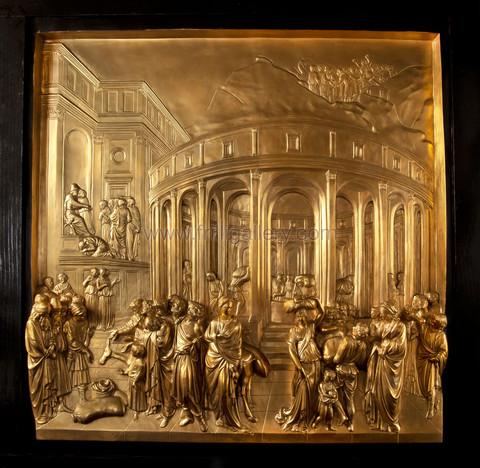
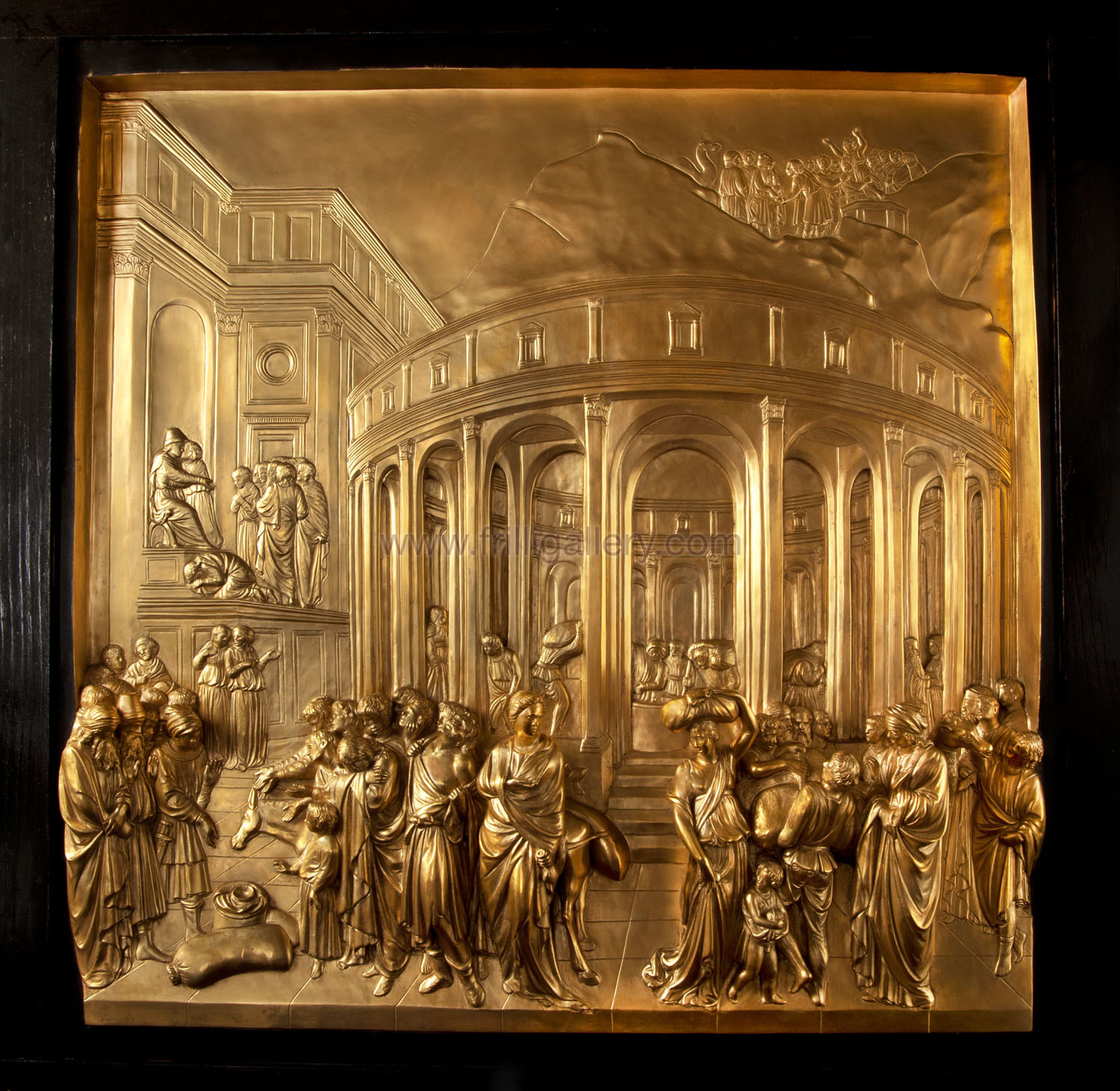
The story begins in the distance at the top right with Joseph’s brothers throwing him into a well and then selling him to merchants. These merchants in turn gave Joseph to the Pharoah of Egypt.
Joseph oversees the storage and distribution of grain:
After interpreting the Pharoah’s dream of a famine, Jospeh was put in charge of creating enormous public granaries.
Benjamin is found with a silver cup:
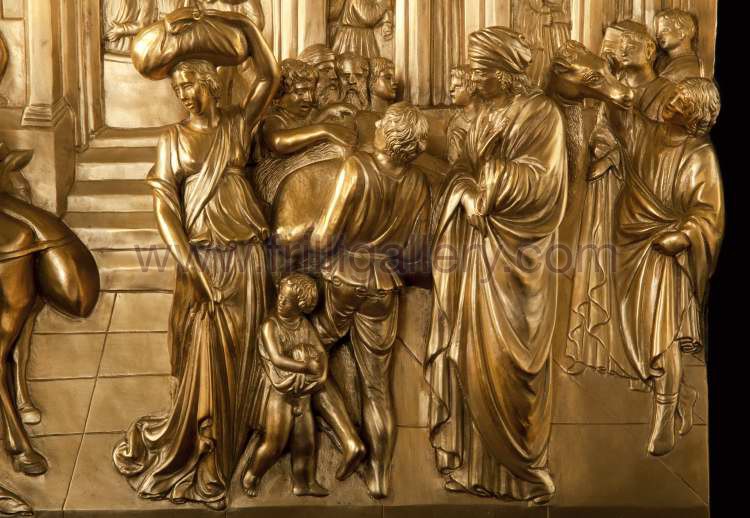
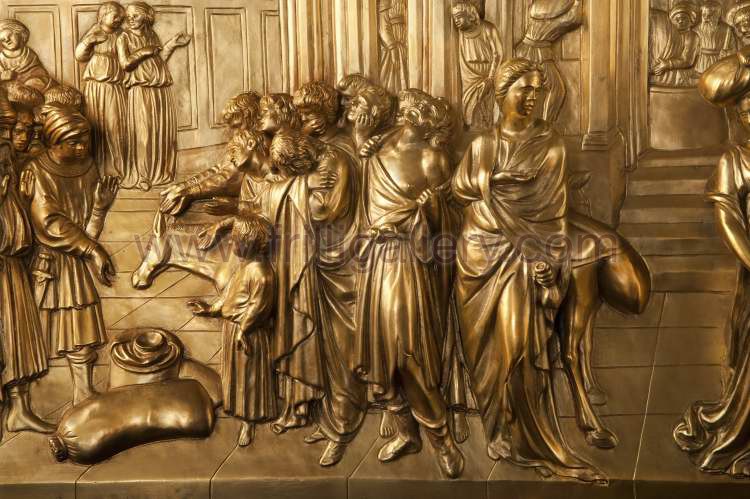
Jacob sends his sons to Egypt to buy corn during the famine, when Jospeh recognizes them but they don’t recognize him. During another visit Joseph has his own silver cup planted inside the sack of his youngest brother Benjamin. Jospeh then sends an emissary to accuse his brothers of stealing the cup. To their shock it is found in Benjamin’s sack.
Joseph reveals himself to his brothers:
The final scene on a platform in the left middle ground shows Joseph reaching out to his brother in reconciliation. Details show how Jospeh’s brothers react when he reveals his true identity.
Banjamin embraces and kisses his long lost brother. One throws himself at his feet in remorse. Others express owe and admiration.
Special Notes:
One challenge Ghiberti faces with this panel is the creation of a round building in a relief. Although the surface is relatively flat, Ghiberti successfully creates the illusion of the building’s curvature by varying the apparent shape of the arches. The figures strolling through and behind the arcade contribute to the building’s apparent depth.
To request info for this item please use the following form